
Market Update for October: Shutdown, Tariffs, and Social Security
In October, the stock market kept doing well even with worries about a government shutdown and new trade issues with China. Many major market indexes hit new record highs after a short period of ups and downs. Bonds also helped investors as interest rates fell, partly because the Federal Reserve cut rates for the second month in a row.
However, the month had some bumps. The government shutdown made headlines and worried some people about a recession. A quick panic over rare earth metal tariffs caused the biggest one-day market drop since April. But markets bounced back fast, showing why it's important not to panic over news headlines. Gold prices also hit a new record before falling back at month's end.
The Social Security Administration said benefits will go up 2.8% in 2026. This is smaller than recent years and may not keep up with rising costs that retirees face. With interest rates on savings accounts also falling, this shows why it's important to have a mix of investments that provide both income and growth.
Key numbers from October
The S&P 500 rose 2.3% in October, the Dow Jones Industrial Average 2.5%, and the Nasdaq 4.7%. For the full year so far, the S&P 500 is up 16.3%, the Dow is up 11.8%, and the Nasdaq is up 22.9%.
The Bloomberg U.S. Aggregate Bond Index gained 0.6% in October. The 10-year Treasury yield ended the month at 4.08%.
International developed markets gained 1.1% using the MSCI EAFE index, while emerging markets jumped 4.1% based on the MSCI EM index.
Gold prices ended the month at $3,997, after reaching a new all-time high of $4,336 earlier in the month.
The Consumer Price Index showed that prices rose 3.0% compared to a year earlier. This number is used to calculate the Social Security cost-of-living adjustment (COLA), which will be 2.8% in 2026.
The government shutdown didn't hurt markets
October started with a government shutdown that is now one of the longest ever. This happens when Congress can't agree on a new budget. Many agencies, including those that provide economic reports, have been working at minimum levels.
While shutdowns create problems for federal workers and their families, it's important to stay calm about investments. In the past, government shutdowns haven't had lasting effects on financial markets because government spending is usually just delayed, not canceled. The longest previous shutdown lasted 35 days in 2018-2019, but the S&P 500 still gained 31.5% in 2019. This doesn't guarantee the same will happen now, but it shows markets often move past these events.
Trade tensions caused a brief market drop
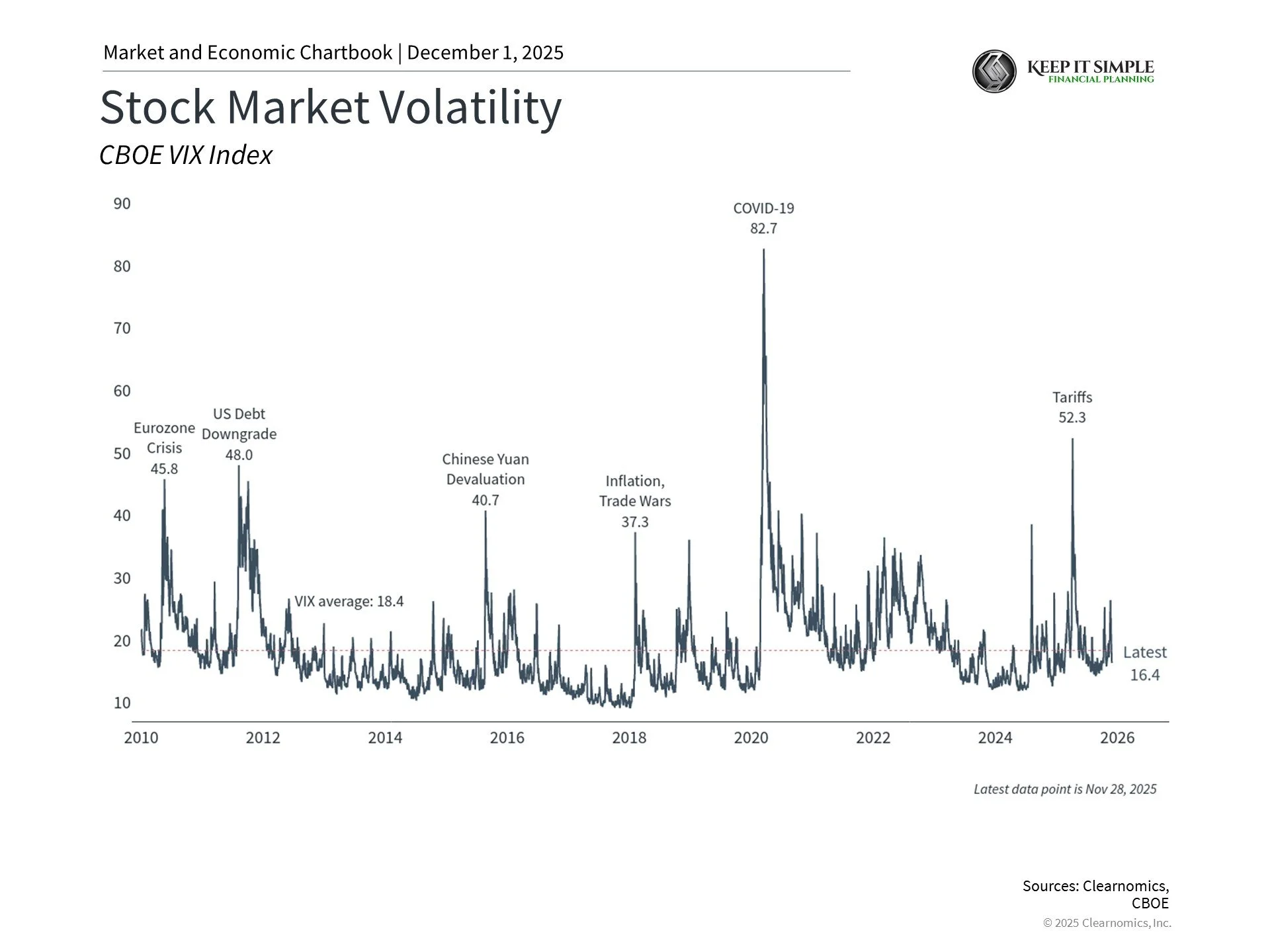
The market had its biggest one-day drop since April because of rising tensions between the U.S. and China over rare earth metals. Rare earth metals are materials used in many products, and China controls about 70% of global production. This gives China significant power in trade negotiations.
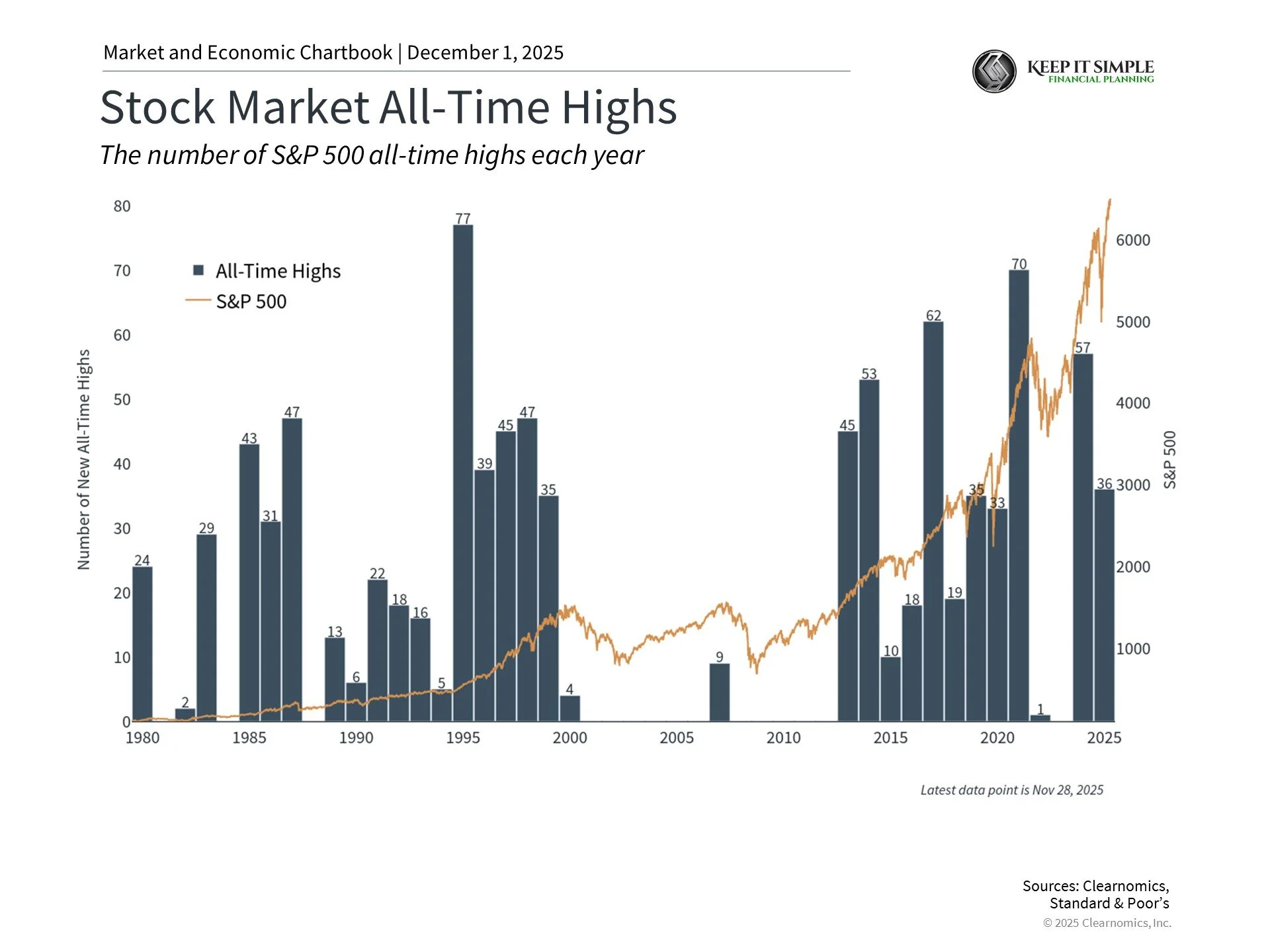
But markets quickly recovered after the White House used softer language. Presidents Trump and Xi met near the end of October, which led to lower tensions and a 10% reduction in tariffs on China. This pattern has happened several times this year, with trade worries causing temporary drops followed by recovery. The S&P 500 has risen 37% from its April low and set 36 new record highs through October.
The Fed keeps lowering interest rates
In October, the Federal Reserve (the Fed) lowered interest rates by 0.25% to a range of 3.75% to 4.00%. This was the second month in a row of rate cuts. The Fed is trying to support economic growth while dealing with inflation and a weakening job market.
Markets expect another rate cut by January, with possibly one or two more cuts in 2026. The Fed also said it would stop shrinking its balance sheet in December, which means it will keep buying bonds to support the economy. For investors, falling interest rates have historically created opportunities across different types of investments.
Retirees face challenges from small benefit increases and lower rates
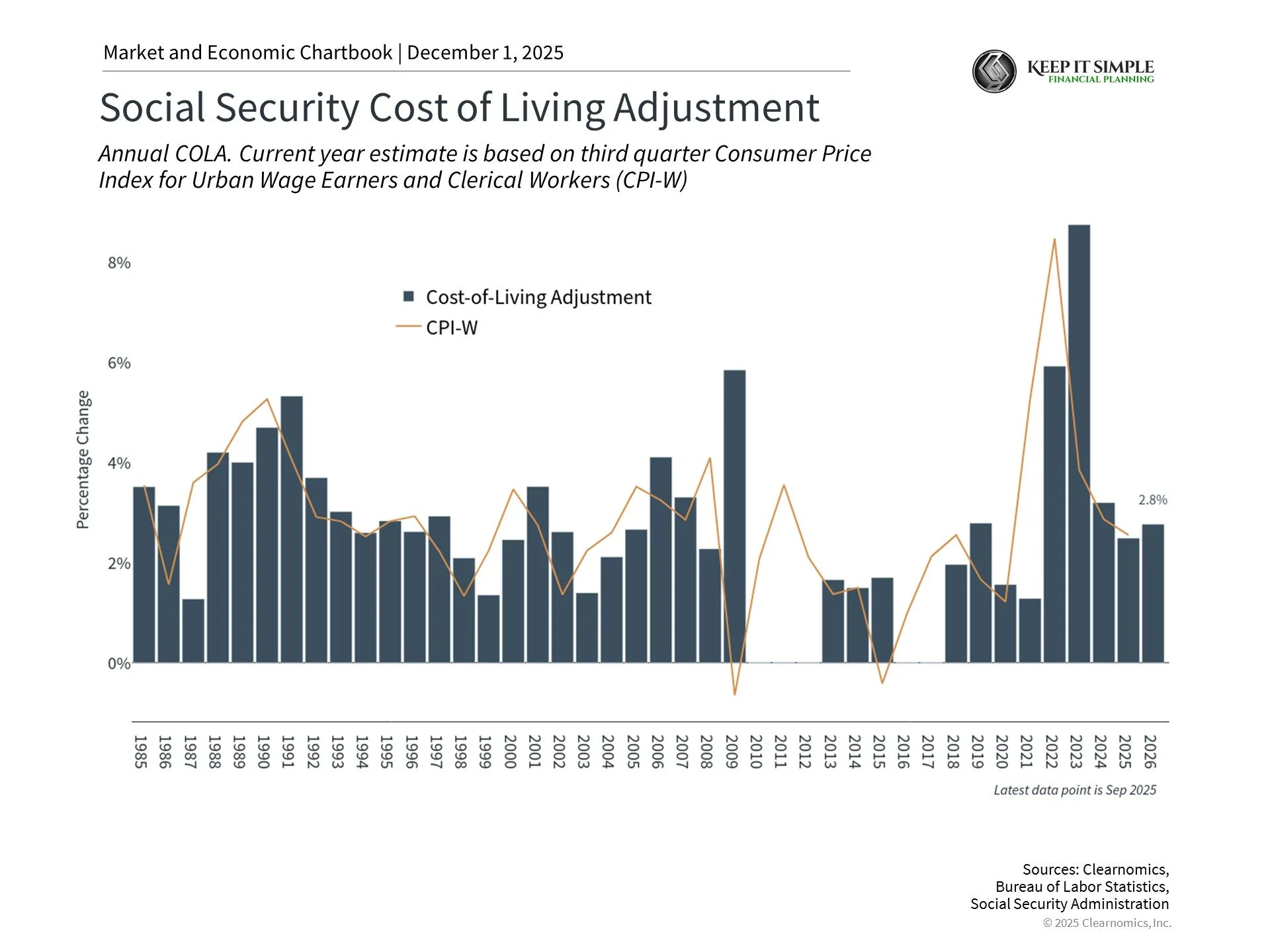
The Social Security Administration announced a 2.8% cost-of-living adjustment (COLA) for 2026. For the average Social Security recipient, the monthly benefit will be about $2,064, an increase of only $56. This is much smaller than the 8.7% increase in 2023.
The problem for retirees is that the COLA calculation may not match the actual price increases they experience. Healthcare costs, housing expenses, and other items that retirees spend more on have often risen faster than the overall measure. For example, medical care services rose 3.9% over the past year, health insurance increased 4.2%, and home insurance climbed 7.5%.
Many retirees will live into their 90s, so planning for 20-30 years of retirement requires investments that can provide both income and growth over time. This is why working with a financial advisor can be valuable.
The bottom line? Despite government shutdowns, trade tensions, and other uncertainties, markets had a strong October. Sticking with a long-term investment plan remains the best approach as we head toward the end of the year.
Want to learn how Keep It Simple Financial Planning can help? Please don’t hesitate to reach out here.